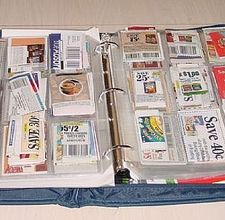
- The first step to planning a trip is checking the ad. I looked through the grocery ads that came in the mail (they are also available on most grocery websites). I circled some items that looked like good deals and began a list.

2. I checked the grocery coupon match-ups at The Frugal Find and selected items to create my list. I printed two of the KC Masterpiece coupons from the link provided. Then I printed my list.
 3. Once you have been couponing for a little while, you will begin to recognize products for which there were recent coupons. To help me remember where that coupon is or to find a coupon to print I check sale items on my list against a coupon database.
  4. I fine tune my list, keeping the best deals and saving the so-so deals for another week. For example, Ronzoni pasta is $1 and I knew there were $1 coupons available that could make pasta FREE. Unfortunately the coupons were for the vegetable variety, which were not part of the $1 sale. So, I crossed Ronzoni off my list and will wait for the vegetable variety to go on sale for $1 (as they were at Save Mart a few months ago). Then, I combine both lists (my list and the list from The Frugal Find) to create my final list.
Final List
 5. I cut out the coupons and place them inside my list (original Frugal Find list folded in half).

6. I head to the store to get:
1 Pound Strawberries FREE
1 Package Breakfast Sausage FREE (retail $4.29)
2 Bottles KC Masterpiece FREE plus $2.22 overage to pay for pork ribs
2 Packages Chips Ahoy for $.69 each
1 Bag Food Should Taste Good snacks for $1 (sweet potato chips, yum!)
1 Box Quaker Squares cereal for $1
and some nice deals on fruit and chicken
A few notes:
- This was a slow week so my list is relatively short. Because I buy extra when the sales are good, I don't have to buy much when the sales are scarce.
- Where's the milk? I buy my milk at Rite Aid since it costs less than all our local grocery stores after using the $.55 dairy coupon.
- Where's the veggies? I just bought 4 pounds of frozen veggies and two salads for $4 last week so we'll use those veggies until the next sale.
- You told me to stockpile! Unfortunately, this week is a poor example of stockpiling. The store coupons were limit 1 or 2. Ordinarily, I would have purchased several bags of Food Should Taste Good since they were at my Buy Now price ($1), but the coupon says limit one per customer. I only had one Quaker Squares coupon since it came on a free sample limiting my purchase to one. The only item that I stockpiled was barbecue sauce (as two bottles will last our family until the next sales cycle, 6 to 8 weeks from now).
- This took me about 15 minutes. Better weeks may take a little more time.
- Since I shop with my girls, I like to make sure I am completely prepared and not fumbling for coupons or lists. A little time at home (perhaps during naps or after bedtime) saves time and sanity in the store.
- Here's an example of stacking store coupons with manufacturer coupons:
 Notice the $1 coupon says manufacturer's coupon at the top and the numerical code at the bottom begins with a 5. The Raley's coupon begins with 0. I read the coupons to make sure that the sizes match up. I also noticed that the Raley's coupon says limit 2 so I can use a second manufacturer's coupon to get 2 packages for $.69 each.