The Binder:
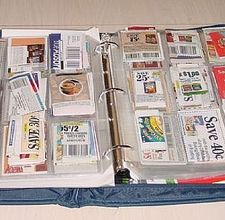
This method consists of coupons cut, sorted, and placed in trading card displays in a three ring notebook.
Pros:
- It is the most organized method and can be arranged to fit your preference
- The user never misses a coupon match up as the coupons are always available during shopping excursions
- It can be used for all types of coupons (inserts, printables, blinkies, hangtags, peelies, etc.).
- It is probably the most compact method of storing coupons
- The user will not need to use a coupon database as regularly as a non-binder couponer
Cons:
- It is the most time consuming as each coupon must be cut and sorted, even if it is never used
- It can be bulky and awkward during shopping and can make runs more time consuming unless coupons are already removed for the current trip
- It requires an initial investment in the notebook and cards
- It will require maintenance as coupons will expire and need to be removed on a regular basis
Whole Insert:

Newspaper inserts are stored in hanging files or magazine holders by date.
Pros:
- This method saves time as a coupon is only accessed and cut when it is needed
- It is easy to find coupons when using a coupon database
- It is free or very inexpensive to start and maintain
- You only need to dispose of (or recycle) expired coupons when every coupon in the insert has expired so it is quick and easy to upkeep as long as the couponer took the time to label the furthest expiration date (see below)
Cons:
- This method takes up space
- It would be impractical to take all the inserts to the store so shopping must be planned in advance and newly discovered savings or clearance coupon match-ups may be missed
- A system for organizing printed coupons, blinkies, hangtags, tearpads, and other coupons must be developed in addition to this method
- It will require regular access to a coupon database since coupons are not easy to find by searching through weeks of inserts.
I use the whole insert method and recommend the following tips for making this method most efficient:


- Write the insert date on the front of each insert (the date is available on the ribbing, but it is tiny and will require eye strain).
- Each Sunday, flip through the insert and find the last expiring coupon in the insert. Write that date on the front of the insert as well (so you will know when to throw or recycle that insert).
- Consider writing any great coupons on the front of the insert or immediately pulling out any coupons that you know you will use (I pull out free item coupons and Real California Dairy coupons and put them in my wallet in case I am out and need to buy milk or need a free item to use as a filler).
Since I use the Whole Insert method, I keep all my printed coupons in a folder and loose coupons in a tub (arranged by type).
Best of Both Worlds?
I'm seriously considering beginning a coupon folder for high value and frequently used coupons. I would probably cut the coupons that I am highly likely to use and leave the vast majority stored whole insert. I'll let you know if I take the plunge into a modified binder method. :)
Coupon Tips:
- Start slow. Either begin with the whole insert method or begin with a simple coupon folder. As you build up your collection you can invest in a better method.
- Keep the best coupons with you. I carry high value, free item, and frequently used coupons with me. For example, I always have dairy coupons with me.
- Divide by stores: Since I use the whole insert method, I keep a clear plastic gallon sized bag with each store's coupons. For example, I have Rite Aid, Safeway, and Target bags that contain their respective store coupons. When I plan my shopping trip, I place all of the coupons I anticipate using in the appropriate store bag with my list facing externally. Many who use the binder method also have separate sections for run and/or stores.
- Don't throw them away: Unless you are absolutely convinced that you would never buy it even if it made you plenty of money, don't throw it away before it expires! A single coupon has made me as much as $10 on an item that I would have never thought to buy. It is often the strange pharmacy items that make you money.
Do you have any tips or a good method to share?


